

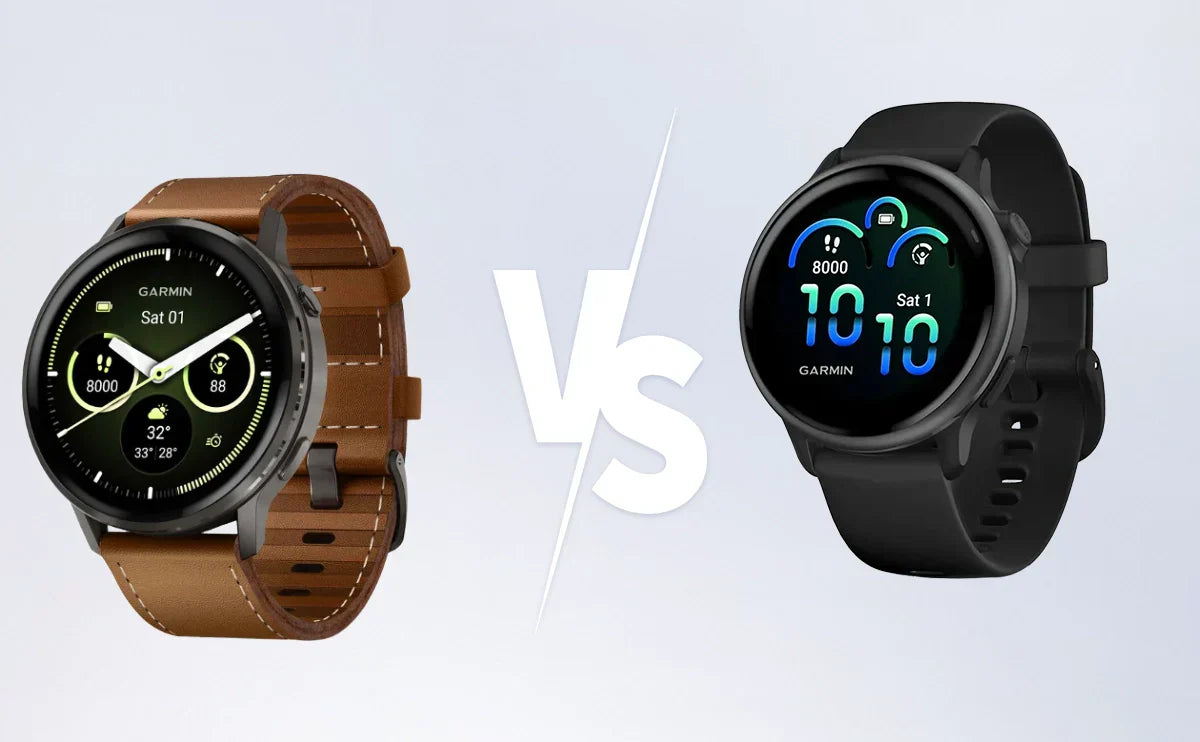
Vivoactive 6 is the lighter, lower-cost option, and it already offers guided running plans, strength workouts, PacePro pacing and recovery information. Venu 4 adds phone-connected calls, an LED flashlight, ECG support, multi-band GPS and more training analysis. Its 45 mm version also gives you a larger screen.
The useful question is which of those extras you will use. A higher price does not make Venu 4 the better fit for every runner, gym-goer or daily wearer.
Contents
- Quick Comparison: What Changes Between the Watches?
- Design and Comfort: Size, Weight and Everyday Wear
- Display: The Larger Venu 4 Has the Advantage
- Health Tracking: What Is Shared, and What Is Extra?
- Sports and Training: Vivoactive 6 Does More Than Record Casual Workouts
- Battery Life: Compare the Same Usage Mode
- Notifications, Music and Calls: Know the Limits
- Price and Value: Compare Equivalent Packages
- Band Sizes: 18 mm, 20 mm and 22 mm Are Different Fits
- Which Watch Should You Choose?
- Garmin Venu 4 vs Vivoactive 6 FAQs
Quick Comparison: What Changes Between the Watches?
Both from Garmin but designed for different users - the Garmin Venu 4 focuses on high-end precision health and sports tracking, while the Garmin Vivoactive 6 emphasizes practicality, durability, and unbeatable value. Both watches offer rich features, AMOLED displays, and over a week of battery life, but which one is truly right for you? Precision training and professional health monitoring, or everyday fitness with lightweight comfort?
In this article, we reveal the hidden differences between Garmin Venu 4 vs Vivoactive 6, sharing the key insights you need before making your choice.
Also read: Garmin Vivoactive 6 vs Garmin Forerunner 265, Garmin Vivoactive 6 vs Galaxy Watch 8 Classic and Garmin Vivoactive 6 vs Garmin Venu 3.
| Your priority | Examine first | Why |
|---|---|---|
| Lower cost and less weight on the wrist | Vivoactive 6 | 36 g with its included band; guided fitness and running tools are already available |
| A larger screen for messages and workout data | Venu 4, 45 mm | 1.4-inch display; the 41 mm Venu 4 and Vivoactive 6 both have 1.2-inch screens |
| Talking through the watch | Venu 4 | Built-in speaker and microphone, with a compatible phone connected |
| ECG and overnight skin-temperature trends | Venu 4 | Additional health capabilities; ECG has eligibility and regional restrictions |
| Training readiness and load analysis | Venu 4 | More information for planning training and recovery |
| Reusing a standard 20 mm quick-release band | Vivoactive 6 | Venu 4 uses 18 mm or 22 mm, depending on case size |
Vivoactive 6’s lower price buys fewer extras, but it does not remove the ability to follow a running plan or use on-watch workouts. Start with the activities you do, then compare the features that support them.
Design and Comfort: Size, Weight and Everyday Wear
Venu 4 comes in 41 mm and 45 mm versions. Vivoactive 6 has one 42.2 mm case. The smaller Venu 4 therefore has a slightly narrower case than Vivoactive 6, but it is thicker and heavier.
| Specification | Venu 4, 41 mm | Venu 4, 45 mm | Vivoactive 6 |
|---|---|---|---|
| Case dimensions | 41 × 41 × 12 mm | 45 × 45 × 12.5 mm | 42.2 × 42.2 × 10.9 mm |
| Weight, watch only | 33 g | 38 g | 23 g |
| Weight with included band | 46 g | 56 g | 36 g |
| Bezel | Stainless steel | Stainless steel | Anodized aluminum |
| Case material | Stainless steel and fiber-reinforced polymer | Stainless steel and fiber-reinforced polymer | Fiber-reinforced polymer |
| Listed wrist range | 110–175 mm | 135–200 mm | 125–190 mm |
*Dimensions and wrist ranges follow Garmin’s U.S. specifications. Weight and fit can change with a replacement band.
For overnight wear, Vivoactive 6’s lower weight and thinner case are worth considering. If you often notice a watch under a sleeve or while sleeping, try both before assuming a smaller case diameter will feel less bulky.
Venu 4’s steel construction gives it a different appearance, but it is not an entirely metal case. Choose the finish you prefer rather than treating the materials as proof of better comfort or accuracy.
The listed wrist ranges also matter. A small wrist may fall within the standard 41 mm Venu 4 range but outside Vivoactive 6’s included-band range. A suitable replacement strap can change fit; it cannot change the watch’s size or weight.

Display: The Larger Venu 4 Has the Advantage
The 45 mm Venu 4 provides more screen area for reading notifications and checking workout data. That can be useful if you find a smaller display cramped, especially when looking at several data fields during exercise.
The 41 mm Venu 4 does not offer a larger or higher-resolution display than Vivoactive 6. Its higher price pays for other features.
We have not measured outdoor visibility or brightness. Screen size and resolution alone do not establish which watch is easier to read in direct sunlight. Display settings and the watch face you choose affect everyday readability too.
| Display specification | Venu 4, 41 mm | Venu 4, 45 mm | Vivoactive 6 |
|---|---|---|---|
| Diameter | 1.2 inches | 1.4 inches | 1.2 inches |
| Resolution | 390 × 390 pixels | 454 × 454 pixels | 390 × 390 pixels |
Health Tracking: What Is Shared, and What Is Extra?
Both watches cover all-day heart rate, stress, Body Battery, HRV status, sleep tracking, naps, Sleep Coach and Pulse Ox. Both also support smart wake alarms and sleep alignment.
Current Garmin documentation includes Health Status and Lifestyle Logging on Vivoactive 6 as well as Venu 4. These should not be treated as Venu-only features based on their launch announcements.
| Health feature | Venu 4 | Vivoactive 6 |
|---|---|---|
| Heart rate, stress, Body Battery and HRV status | Available | Available |
| Sleep tracking, Sleep Coach, naps and smart wake | Available | Available |
| Health Status | Includes overnight skin temperature among its metrics | Uses heart rate, HRV, respiration and sleep Pulse Ox data |
| Lifestyle Logging | Available | Available |
| Overnight skin-temperature tracking | Available | Not listed |
| Garmin ECG app | Supported where eligible | Not supported |
Health Status compares overnight readings with your personal baseline. Garmin says the feature needs approximately three weeks of wear to establish that baseline. It is useful for noticing changes in your usual pattern, rather than explaining the cause of every unusual reading.
Lifestyle Logging helps you record habits, such as late caffeine or a change in bedtime, and examine their relationship with your health trends. It gives you more context; it does not prove that one habit caused a particular result.
Venu 4’s clearer health differences are its skin-temperature capability and ECG support. The ECG app requires an eligible region, compatible software and a user aged 22 or over. It is not a reason to describe all of the watch’s health readings as “medical-grade.”
For ordinary sleep, stress and recovery trends, Vivoactive 6 already covers much of the same ground. Keep the watch and Garmin Connect updated when comparing available features.

Sports and Training: Vivoactive 6 Does More Than Record Casual Workouts
Vivoactive 6 supports regular training, including Garmin Coach running and strength plans, guided workouts, running dynamics, running power, VO2 max, PacePro, workout benefit and recovery time. It also has daily suggested walking workouts.
For a runner following a plan for a race, or someone doing several gym sessions each week, that is a useful set of tools. Calling it a watch only for occasional exercise overlooks what it can do.
Both watches can guide you through planned workouts and intervals.
Venu 4 adds more ways to plan and evaluate training.
| Training tool | Venu 4 | Vivoactive 6 | What it changes for you |
|---|---|---|---|
| Garmin Coach running and strength plans | Available | Available | Follow scheduled guidance rather than record sessions without a plan |
| PacePro and wrist-based running dynamics | Available | Available | Use pacing guidance and review running-form metrics |
| Workout benefit and recovery time | Available | Available | Review a session’s effect and suggested recovery |
| Training readiness | Available | Not listed | Bring sleep, HRV, recovery and load information into a daily readiness score |
| Training status and load focus | Available | Not listed | Review longer-term training progress and the balance of different efforts |
| Garmin Fitness Coach | Available | Not listed | Get adaptive guidance across a wider range of fitness activities |
| Adaptive Garmin Cycling Coach | Available | Not listed; prebuilt cycling plans are available | Add adaptive cycling guidance rather than assume the coaching options are identical |
A readiness score can help when you are deciding whether to keep a harder session or make the day easier. Load information becomes more relevant as you increase training volume or combine demanding sessions. These tools are less valuable if you already follow a coach’s plan and rarely consult the watch’s recommendations.
Venu 4 also supports mixed-session multisport recording. That suits a workout combining, for example, strength, mobility and cardio. Check the particular activity and data fields you need rather than using the number of sport profiles as a quality score.

Battery Life: Compare the Same Usage Mode
The bigger Venu 4 does not win every battery comparison, and its headline rating should not be applied to the 41 mm model.
| Garmin-rated mode | Venu 4, 41 mm | Venu 4, 45 mm | Vivoactive 6 |
|---|---|---|---|
| Smartwatch | Up to 10 days | Up to 12 days | Up to 11 days |
| Smartwatch, always-on display | Up to 3 days | Up to 4 days | Up to 5 days |
| GPS only | Up to 15 hours | Up to 20 hours | Up to 21 hours |
| All satellite systems | Up to 13 hours | Up to 19 hours | Up to 17 hours |
| All satellite systems with music | Up to 6 hours | Up to 9 hours | Up to 8 hours |
| All satellite systems plus multi-band | Up to 12 hours | Up to 17 hours |
Not supported |
In these ratings, Vivoactive 6 lasts longer in GPS-only mode and with an always-on display. Venu 4, 45 mm lasts longer in standard smartwatch mode and all-systems mode. The 41 mm Venu 4 trades some endurance for its smaller case.
Compare your own week: GPS sessions, music playback, display setting and overnight wear. Notifications, sensor settings and other enabled features affect actual battery life. Battery-saver ratings also involve reduced functionality, so they should not be compared with normal-use ratings.
See Garmin’s Venu 4 battery table and Vivoactive 6 battery table for the mode-specific limits.
Notifications, Music and Calls: Know the Limits
Both watches receive notifications from a compatible paired iPhone or Android phone. Both support Garmin Pay and music stored on the watch.
Venu 4’s speaker and microphone let you talk through the watch when your compatible phone is connected. You can also use the phone’s voice assistant. Certain on-watch commands, such as starting an activity or setting a timer, work without a phone connection.
Vivoactive 6 can show an incoming call and let you accept or decline it, but you must use the connected phone to speak. Accepting a call notification is different from holding the conversation through the watch.
| Action | Venu 4 | Vivoactive 6 |
|---|---|---|
| View paired-phone notifications | Yes | Yes |
| Talk through the watch | Yes, with a compatible connected phone | No; use the phone to speak |
| Native replies to phone text notifications | Compatible Android phones | Compatible Android phones |
| Use the paired phone’s voice assistant | Yes | No built-in microphone for this |
| Listen to downloaded watch music | Yes | Yes |
| Make independent cellular calls | No | No |
On an iPhone, do not assume the native text-reply options work as they do on Android. Venu 4’s phone-assistant route is a separate function; messaging apps can have their own requirements.
Downloaded music can play without carrying your phone once the content is synced. Compatible Bluetooth headphones are supported, and services such as Spotify, Amazon Music and Deezer may require a subscription. Music playback also reduces battery life. Garmin Pay depends on your country and participating bank or card.

Price and Value: Compare Equivalent Packages
For a fair price comparison, use new watches from the same market with the same type of included band. Do not compare a Venu 4 leather bundle with a standard Vivoactive 6 and attribute the whole difference to watch features.
At our October 12, 2026 check, Garmin’s U.S. product pages listed these prices:
| U.S. configuration | Listed price |
|---|---|
| Venu 4, 41 mm, with standard silicone band | $549.99 |
| Venu 4, 45 mm, with standard silicone band | $549.99 |
| Vivoactive 6, with standard band | $299.99 |
| Venu 4 silicone-plus-leather bundles | $599.99 |
The standard-band comparison leaves a $250 difference. Venu 4’s value depends on how much you want calls, ECG, an LED flashlight, multi-band GPS and its extra training tools. The 45 mm version also adds the larger display.
If you want music, sleep tracking, running plans and gym workouts, those are already reasons to consider Vivoactive 6. Paying more for Venu 4 solely to obtain those shared features would miss the point of the comparison.
Band Sizes: 18 mm, 20 mm and 22 mm Are Different Fits
The Garmin Vivoactive 6 band size is 20 mm, using a standard quick-release connection. Venu 4 needs a different width for each case size.
| Watch | Band width | Connection |
|---|---|---|
| Venu 4, 41 mm | 18 mm | Standard quick release |
| Venu 4, 45 mm | 22 mm | Standard quick release |
| Vivoactive 6 | 20 mm |
Standard quick release |
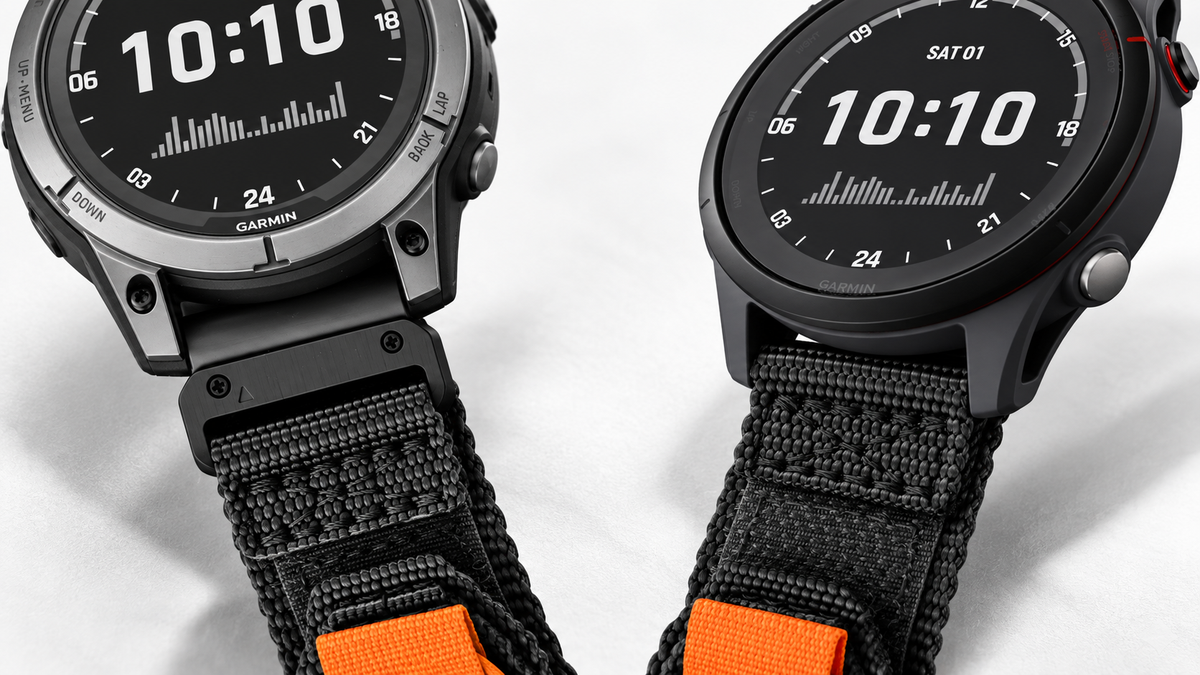
A Vivoactive 6 strap will not fit either Venu 4 size simply because all three watches are Garmin. Case diameter, band width and strap length are separate measurements.
Check your wrist circumference, the strap’s adjustment range and its connector before ordering. A 22 mm QuickFit strap should not be assumed to fit a 22 mm standard quick-release watch.
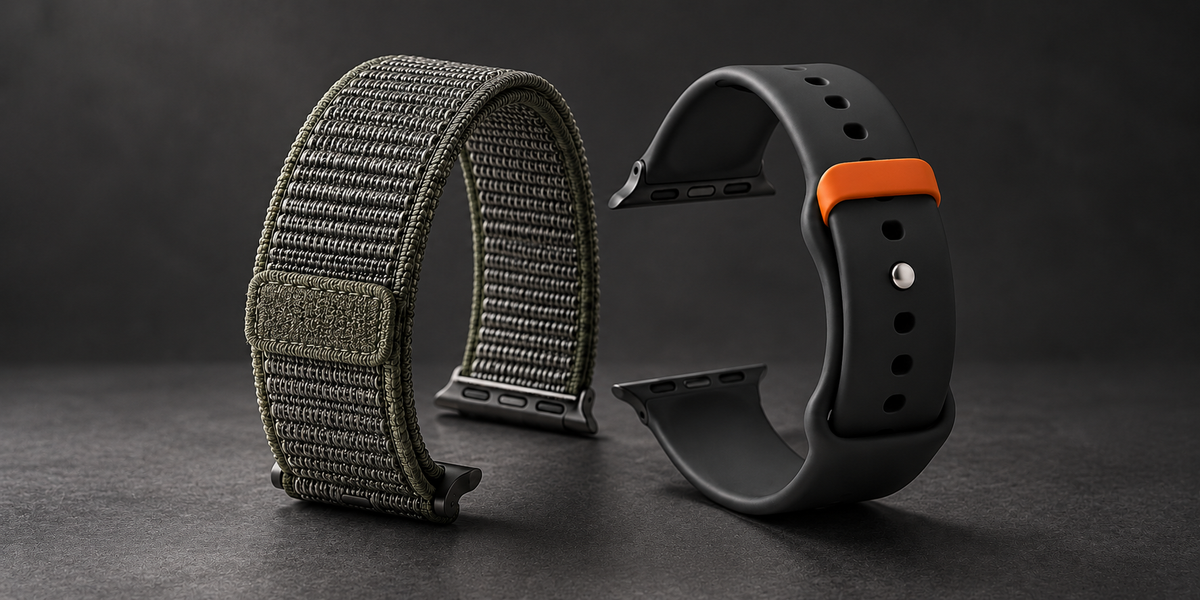
Browse Bandletic Vivoactive watch bands or Venu watch bands, then confirm the exact model and width in the individual listing.
Both watches are rated 5 ATM, but a replacement strap’s activity limits still matter. A leather strap or a band not approved for swimming does not become suitable for water activities because the watch itself has a swim rating.
Which Watch Should You Choose?
Choose Vivoactive 6 if you want a lighter watch, prefer the lower price and plan to use running guidance, gym workouts, music and everyday wellness tracking. It can support a consistent training routine without Venu 4’s readiness score or load analysis.
Choose Venu 4 if calls from the wrist, ECG eligibility, an LED flashlight or additional training analysis solve a specific need. The 45 mm model makes sense if a larger display matters; the 41 mm model suits someone who wants Venu’s features in the smaller case.
Keep your current watch if it already does the job and the new features would rarely get used. A worn or uncomfortable band can often be replaced without replacing the watch.
For a closer look at the lower-cost model, read our Vivoactive 6 review. If a dedicated running watch is also on your shortlist, see our Vivoactive 6 vs Forerunner 265 comparison and verify the particular training tools you need.
Garmin Venu 4 vs Vivoactive 6 FAQs
1. Is Vivoactive 6 a good choice for regular running?
Yes. It supports running plans, PacePro, running dynamics, running power, workout benefit and recovery time. Consider Venu 4 when you also want readiness and load analysis or multi-band GPS.
2. Can Vivoactive 6 answer phone calls?
It can accept or decline an incoming call notification, but you need your connected phone to talk. Venu 4 can carry the conversation through its speaker and microphone while connected to a compatible phone.
3. Does Vivoactive 6 have ECG?
No. Venu 4 supports Garmin’s ECG app for eligible users in supported regions. Keep the watch and app software current and check local availability before buying for ECG.
4. Does Venu 4 have a better screen?
The 45 mm version has a larger, higher-resolution screen. The 41 mm version and Vivoactive 6 both have 1.2-inch, 390 × 390 displays. We have not measured brightness or outdoor readability.
5. Which watch lasts longer between charges?
It depends on size and mode. Vivoactive 6 has the higher GPS-only and always-on-display ratings; Venu 4, 45 mm has the higher standard smartwatch and all-systems ratings. The battery table above separates those modes.
6. Can I reuse my Vivoactive band on Venu 4?
Not if it is a 20 mm Vivoactive 6 band. Venu 4, 41 mm uses 18 mm; Venu 4, 45 mm uses 22 mm. Match the connection and adjustment range as well as width.
7. Which is better for golf?
Both provide front, middle and back distances, hazards, Green View and a digital scorecard. Venu 4, 45 mm offers more display area; Vivoactive 6 weighs less. Check the golf views you use rather than assume Venu’s higher price makes every golf task easier.
Share:
Garmin Venu 4 vs Garmin Forerunner 970 - Which Smartwatch Fits You Best?
Garmin Forerunner 265 vs Forerunner 255 - Complete Specs & Performance Review
1 comment
How do the venu4 and Vivoactive 6 compare for ease of use for golf?
How do these both compare functionally compared to the Garmin Approach S12?