

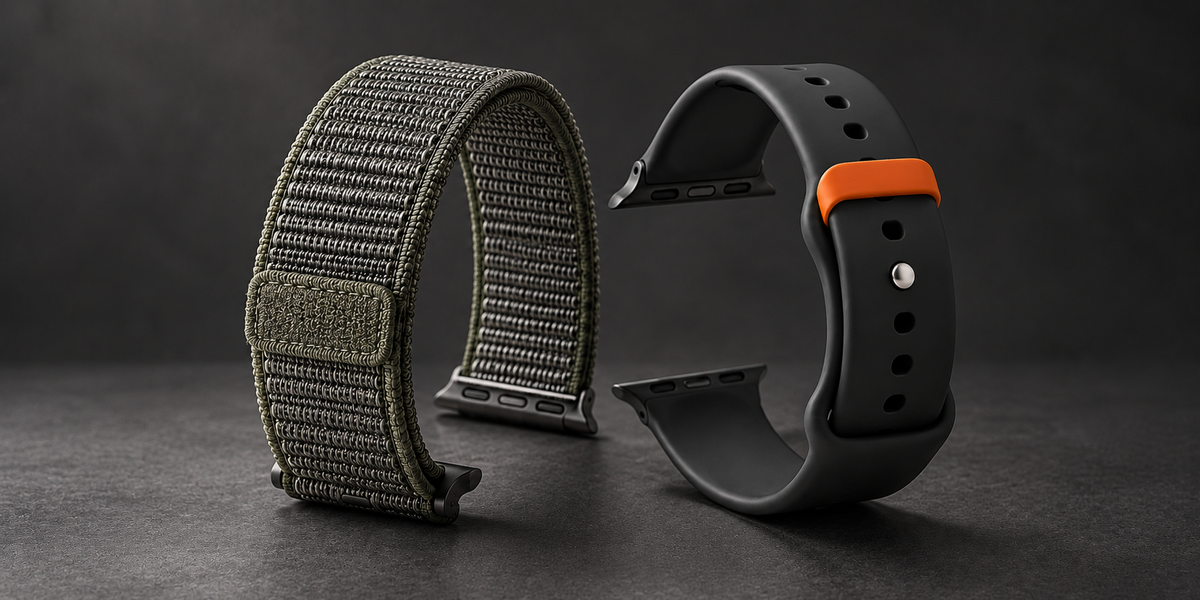
The nylon vs silicone watch band choice comes down to three things: how you like a band to feel, what happens after it gets wet, and how it adjusts. Compare nylon and silicone watch bands for everyday wear and workouts. Learn how fit, moisture, cleaning and closure design affect your choice.
Contents
- Nylon vs Silicone: The Quick Answer
- Comfort and Adjustability
- Sweat, Rain and Drying
- Cleaning and Everyday Care
- Closure Design Matters as Much as Material
- Choosing for Apple Watch and Garmin
- Which Material Fits Your Routine?
- Nylon vs Silicone FAQs
Nylon vs Silicone: The Quick Answer
Choose nylon if you prefer a woven feel and want a band with fine fit adjustment. Be prepared to remove it and let it dry after heavy sweating or a thorough wash.
Choose silicone if you would rather wipe away sweat and water than wait for fabric to dry. Check the closure first: a band with widely spaced holes may leave you between a comfortable fit and a secure one.
Neither material suits everyone. A thin nylon loop and a thick nylon strap can feel quite different; the same goes for smooth and textured silicone bands.
| What matters to you | Nylon | Silicone |
|---|---|---|
| Feel against the wrist | Woven texture; softness depends on the weave, edges and thickness | Flexible surface; comfort depends on thickness, texture and fit |
| Small fit changes | Possible with some loop or sliding closures | Depends on the design; hole-based closures adjust in steps |
| After sweat or rain | Moisture can remain within the weave and overlapping sections | Surface moisture is generally easier to wipe away |
| Regular care | Allow time for washing, rinsing and thorough air-drying | Clean the underside, holes and closure as well as the visible surface |
| Swimming | Check the specific band’s instructions | Check the specific band’s instructions |
Comfort and Adjustability
A woven nylon band can feel less smooth and less clingy than silicone. Whether that feels better is personal. Look at the edges, stitching and overlapping layers: a soft fabric can still feel bulky or rub where it folds.
Silicone can also be comfortable for long wear. A broad, solid strap covers more skin, though, and may feel damp underneath after exercise. Cutouts and underside shaping change the contact area, so compare the actual designs.
Adjustment often matters more than the material. A hook-and-loop closure lets you make small changes without moving to the next hole. A pin or traditional buckle uses fixed positions. Some nylon bands have buckles; some silicone bands have other adjustment systems.
For workouts, aim for a fit that keeps the watch in contact with your skin without squeezing your wrist. Loosen it afterward if needed. Buying a softer material will not fix a band that is too tight.
Sweat, Rain and Drying
The useful question is what you do after getting wet.
A nylon watch band for workouts can make sense if you like its feel and can change bands afterward. Sweat or rain can leave moisture between the fibers, beneath folded sections and around the closure. The surface may feel dry before those areas do.
After a sweaty session, take it off, clean it according to its instructions and let it dry before putting it back on. A spare band helps if you wear your watch through the evening or overnight.
With silicone, water generally stays on the surface rather than within a fabric weave. That makes wiping it dry simpler, but sweat can still sit between the band and your skin. Remove the band to clean and dry the underside instead of wiping only the outside.
Does a nylon watch band dry quickly? It depends on thickness, weave, overlapping layers, airflow and humidity. There is no useful drying time that applies to every nylon band.
A watch’s water-resistance rating also does not tell you whether its band is suitable for swimming. Check both separately.
Cleaning and Everyday Care
Silicone watch band cleaning usually involves less drying time than caring for a woven band, but it still needs attention. Sweat, lotion and dirt can collect in holes, grooves and the closure.
Remove the band before cleaning. Use the cleaner and method approved for that product, rinse away residue where instructed, and dry it before wearing.
For nylon, allow more time between washing and wearing. Pack’s care instructions call for gentle hand-washing with mild soap, thorough rinsing, towel-pressing and air-drying away from heat. Do not assume every woven band has the same instructions.
Avoid using stronger cleaners simply because a band smells or looks stained. Cleaning rules can differ for the fabric, silicone and attached hardware.
For the full process, see our smartwatch band cleaning and maintenance guide. Follow product-specific instructions where they differ.
Closure Design Matters as Much as Material
Compare these two constructions rather than treating them as examples of how every nylon or silicone band works.
The Pack Outdoor Band uses nylon with a hook-and-loop fastening. Its adjustment does not rely on a row of holes.

Pack: close-up of the woven strap and fastening tabs.
The Cube Magnetic Sport Band combines silicone with an aluminum pin-and-tuck closure and magnetic assistance. The pin engages a hole; the magnetic hold supports the fastening.

Cube: close-up of the adjustment holes and closure pin.
| Product detail | Pack Outdoor Band | Cube Magnetic Sport Band |
|---|---|---|
| Adjustment | Hook-and-loop positioning | Pin-and-tuck hole positions, with magnetic assistance |
| Listed wrist range | M: 165–180 mm; L: 180–200 mm | 145–210 mm in the current size selector |
| Listed Apple Watch options | 49 mm; 46/45/44 mm and Series 1–3 42 mm | 49 mm; larger-case group; smaller-case group, including Series 10/11 42 mm |
| Care | Hand-wash; towel-press; air-dry; no machine washing or tumble-drying | Use the silicone care guide; confirm care for the magnetic hardware |
| Activities excluded by current instructions | Swimming and water sports | Swimming and water sports |
Check the selected variant and current product instructions before ordering.
Hook-and-loop offers fine adjustment, but inspect the fastening surfaces for lint and wear. With a pin-based closure, check that a hole gives you the fit you need and that the pin is fully engaged.
Cube’s magnets may also affect compass readings. Consider that if you use your watch’s compass for navigation.
Choosing for Apple Watch and Garmin
For a nylon vs silicone Apple Watch band comparison, check the model and case size before choosing the material. “42 mm” alone is not enough: Series 1–3 and Series 10 use that number for different compatibility groups.
Use our Apple Watch band size guide for wrist-measurement help, then match your exact watch to the product’s current options.
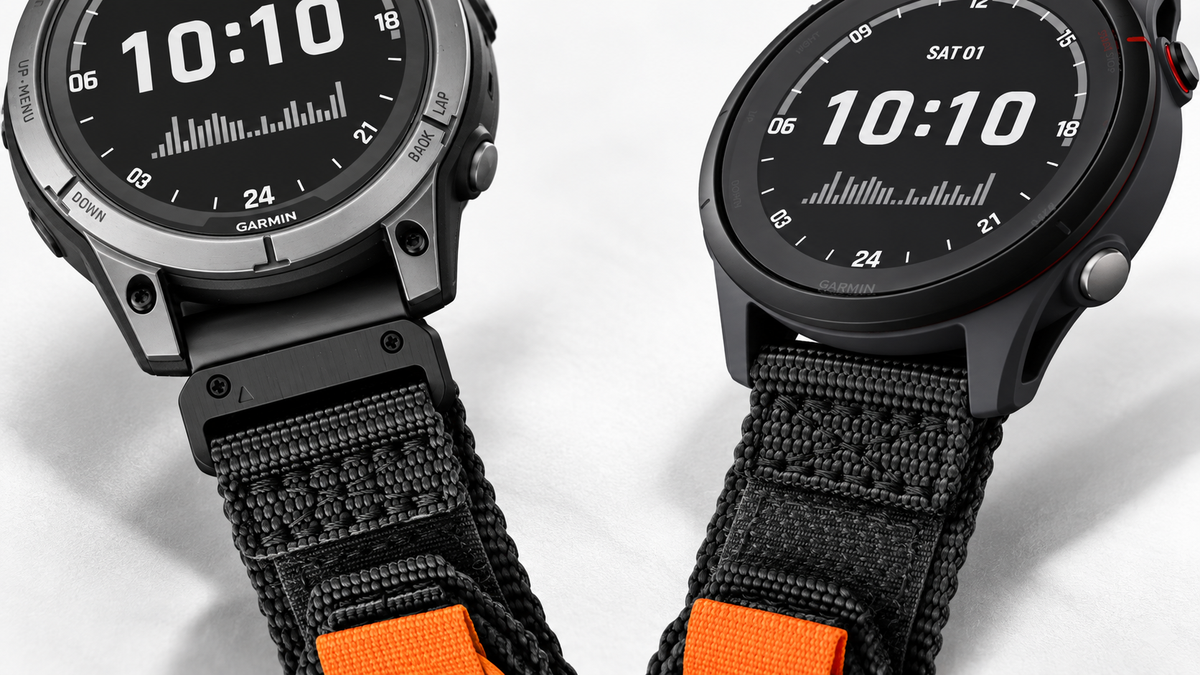
The nylon vs silicone Garmin watch band decision needs an extra connector check. QuickFit and Quick Release are different attachment systems; a matching width alone does not establish compatibility.
Before buying either material, confirm:
- Exact watch model and case size. Avoid relying on the brand name alone.
- Connector system. Check Apple Watch adapters or the Garmin attachment type.
- Required band width. Use your model’s specification, not the watch’s case diameter.
- Wrist circumference. Measure where you wear the watch and compare it with the selected band’s range.
If nylon suits your routine, browse our Garmin nylon watch bands, then check the individual product’s fit and care instructions.
Which Material Fits Your Routine?
Mostly desk work, errands and everyday wear: Start with the feel and adjustment you prefer. Nylon is worth considering if you like fabric against your wrist and want a loop closure that allows small fit changes. Browse our nylon Apple Watch bands.
Workouts followed by a quick return to your day: Silicone may be more convenient if you want to clean and dry the band without waiting for woven layers. Browse our silicone Apple Watch bands, checking the closure and wrist range.
Workouts where you prefer a woven feel: Nylon remains an option if you can remove it afterward and allow thorough drying.
Frequent swimming or water sports: Choose a band explicitly approved for the activity, alongside a suitable watch. The two products compared above are excluded by their current instructions.
Nylon vs Silicone FAQs
1. What should I do after sweating in my watch band?
Remove it and clean away sweat according to the product’s care instructions. Dry your wrist and the band before wearing it again. With nylon, check folded and overlapping areas as well as the exposed fabric.
2. Can I machine-wash a nylon watch band?
Only if the manufacturer explicitly permits it. Pack’s instructions prohibit machine washing and tumble-drying. Garmin’s nylon-strap guidance also specifies hand-washing. A fabric strap can include hardware and fastening parts that need different care from clothing.
3. Is nylon always better for sensitive skin?
No. Neither nylon nor silicone guarantees irritation-free wear. Fit, trapped moisture, cleaning residue and other parts of the band can affect comfort. Keep the band and your skin clean and dry, and stop wearing a band that causes irritation.
4. Can I wear a nylon band while it is still damp?
Let it dry fully first. If you want to keep wearing your watch, change to a clean, dry band rather than leaving damp fabric against your wrist.
5. Is a silicone band automatically suitable for swimming?
No. Check the complete product, including its closure and hardware, and follow its stated activity limits. A silicone strap does not override restrictions on the finished band.

Share:
Best Samsung Galaxy Watch 9 Bands: Sizes & Compatibility
Garmin QuickFit vs Quick Release: How to Choose the Right Band