

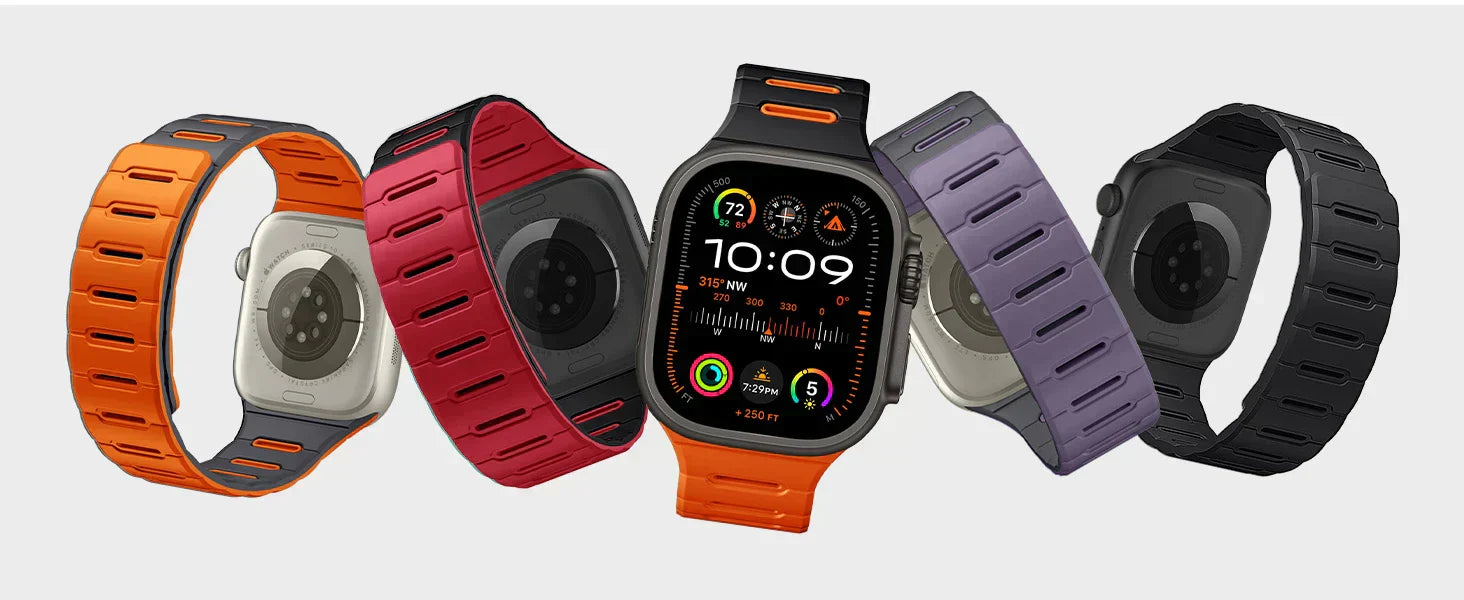
This guide explains how magnetic Apple Watch bands work, the different magnetic locking structures available, and whether they are reliable for daily wear, workouts, travel, and outdoor use. It also compares magnetic Apple Watch bands with traditional buckle straps to help you decide which type best fits your lifestyle and comfort preferences.
Table of Contents
Magnetic Apple Watch bands are worth buying for most users because they offer faster adjustment, better everyday comfort, and a cleaner fit than traditional buckle straps.
A well-designed magnetic Apple Watch band is secure enough for daily wear, commuting, workouts, travel, and casual outdoor activities. Premium models with reinforced magnetic structures or hybrid locking systems are especially reliable for active lifestyles.
How Magnetic Apple Watch Bands Work
Most magnetic Apple Watch straps use built-in neodymium magnets, a powerful rare-earth magnetic material commonly found in electronics and wearable accessories.
When the two sides of the band meet, the magnets automatically align and create a secure closure system.
Unlike traditional buckle straps with fixed sizing holes, magnetic bands allow nearly continuous adjustment across the strap length.
This creates a more precise wrist fit while reducing pressure points during extended wear.
The overall performance of a magnetic watch band depends on several engineering factors, including magnet strength, contact surface area, locking structure, and strap materials.
Main Magnetic Band Structures Explained
Integrated Magnetic Loop Systems
 Integrated magnetic loop systems embed the magnetic components directly inside the strap body, creating a seamless wraparound structure without an exposed clasp. This construction delivers a clean, minimal appearance while allowing the band to flex naturally around the wrist.
Because the magnetic contact area is distributed across a larger section of the band, these designs prioritize comfort, flexibility, and minimalist aesthetics over maximum mechanical locking strength. This structure is commonly used in silicone magnetic sport bands designed for everyday wear and light fitness activities.
As integrated magnetic loop systems continue to evolve, some designs incorporate additional securing elements to enhance overall stability and wearing security. In these hybrid structures, a traditional pin-and-tuck closure is added alongside the magnetic closure, helping to improve stability during movement while still preserving the quick-adjust convenience and clean, minimalist look of magnetic loop designs.
Bandletic applies this design approach in models such as the Cross Magnetic Sport Band, Air Magnetic Sport Band, and Cube Magnetic Sport Band. These bands combine integrated magnetic loop structures with additional pin-buckle reinforcement to create a more secure fit while maintaining the flexible, close-fitting comfort that magnetic loop systems are known for.
Modular Magnetic Clasp Systems
 Modular magnetic clasp systems separate the magnetic locking mechanism from the main strap body.
Instead of relying on full-surface magnetic contact, the closure force is concentrated inside a dedicated clasp module, improving alignment stability and resistance to unintended shifting during movement.
Compared with integrated magnetic loops, modular clasp systems generally provide a more structured fit and better retention under repetitive wrist motion, making them particularly suitable for active daily wear and gym use.
Hybrid Magnetic Lock Systems
 Hybrid magnetic lock systems combine magnetic alignment with an additional mechanical locking component. In these structures, magnets assist with fast positioning and closure, while the secondary locking mechanism helps prevent accidental release during sudden pulling force or high-impact movement.
This design philosophy has become increasingly popular in outdoor-oriented Apple Watch bands because it balances convenience with higher security during hiking, training, travel, and demanding daily use.
As magnetic fastening technology continues to evolve, many modern outdoor-focused watch bands have started integrating more refined hybrid locking designs that improve both usability and wearing stability.
Bandletic’s outdoor-oriented magnetic band lineup follows this direction through advanced magnetic fastening systems designed for fast alignment and secure daily wear. Models such as the Fidlock Neo 2.0 Magnetic Band focus on streamlined quick-release convenience, while the Fidlock Sync 2.0 Magnetic Band is designed for more stable performance during active movement and outdoor use.
Meanwhile, the Interlock Magnetic Outdoor Band series incorporates reinforced structural locking elements that help maintain a secure fit under motion stress and sudden pulling force.
Together, these systems create a more refined user experience—allowing the band to snap into place quickly while remaining stable during movement-intensive activities. Compared with traditional buckle systems, the quick-release magnetic mechanism also makes daily wear and removal significantly faster and more convenient.
When Magnetic Apple Watch Bands Work Best
For most Apple Watch users, magnetic bands perform exceptionally well during everyday wear and regular fitness activities.
They are especially suitable for:
-
Running and gym workouts
-
Walking, commuting, and travel
-
Casual outdoor activities
-
Office and daily wear
-
Users who frequently adjust strap tightness
-
People who prefer lightweight, pressure-free comfort
One major advantage of magnetic Apple Watch bands is their close, adjustable fit. Unlike traditional buckle straps with fixed holes, magnetic systems can wrap more evenly around the wrist, helping reduce looseness and unwanted movement during activity.
For cardio workouts such as running, cycling, treadmill training, rowing, or general gym sessions, a well-designed magnetic band typically stays very stable on the wrist without noticeable shaking or bouncing. This secure fit can also help maintain more consistent sensor contact for heart rate tracking and everyday fitness monitoring.
When Traditional Buckle Bands May Be Better
Although magnetic Apple Watch bands are highly practical for most users, there are still certain situations where traditional buckle systems may be a better choice.
 High-impact sports such as rock climbing, boxing, surfing, or motocross involve sudden and strong pulling forces. In these environments, a traditional buckle or mechanical locking system may provide additional reassurance due to its purely mechanical and non-magnetic structure.
For users with pacemakers, implantable cardioverter defibrillators (ICDs), or other implanted medical devices, it is generally recommended to keep magnetic accessories at a safe distance from the implant area. Medical device manufacturers typically advise maintaining a separation of around 6 inches (15 cm), as strong magnetic fields may temporarily affect device operation.
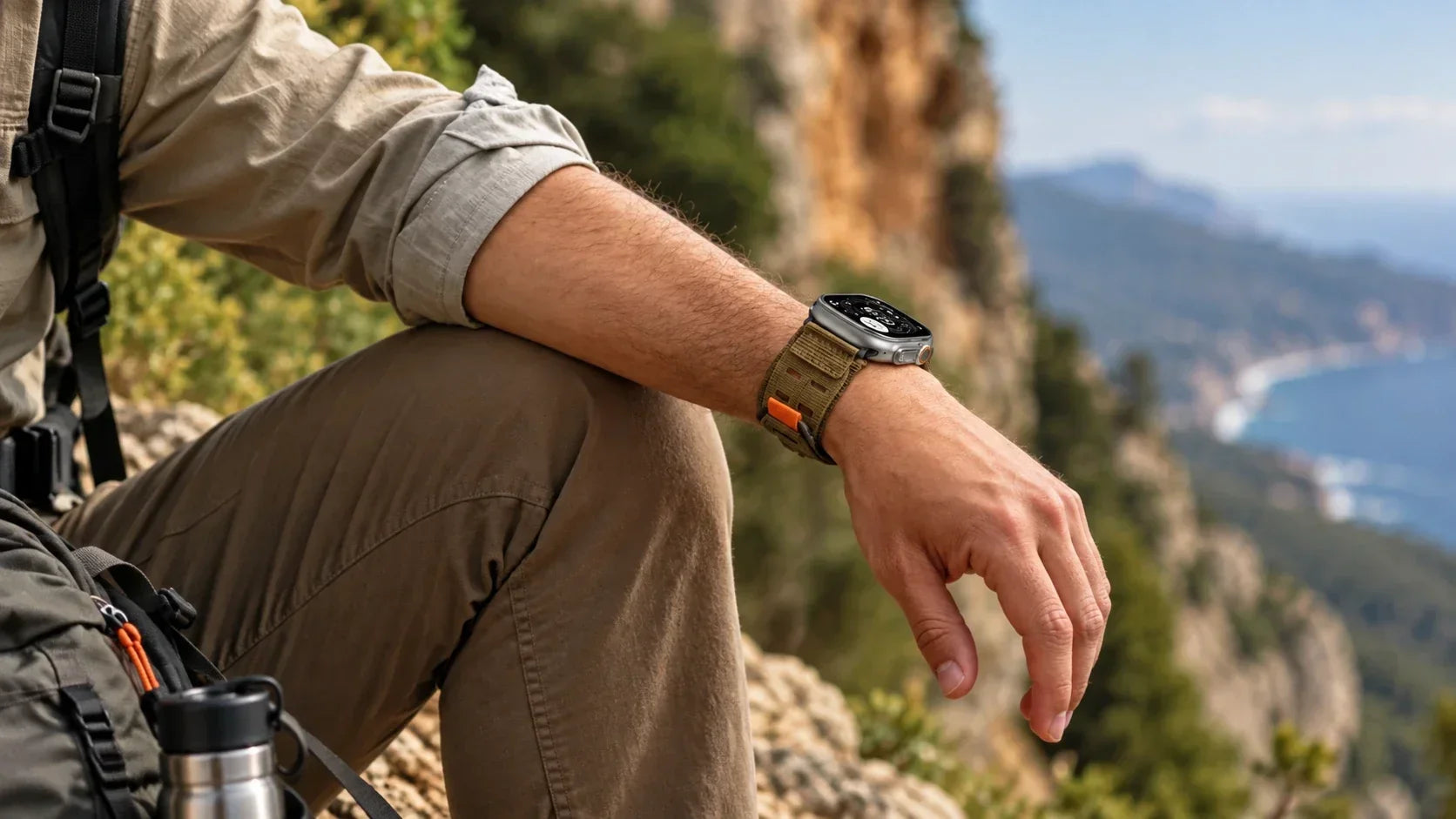
In terms of compass performance, users who require highly accurate directional readings—such as for professional navigation, hiking in remote areas, or other precision-based outdoor activities—may prefer non-magnetic bands. Magnetic components can introduce slight interference to the watch’s magnetometer in close proximity, which may reduce heading accuracy in sensitive scenarios.
However, for everyday use, this effect is minimal. In most daily situations such as commuting, workouts, or casual outdoor activities, magnetic interference does not noticeably affect compass direction, and the Apple Watch generally maintains stable and reliable orientation readings.
In short, magnetic Apple Watch bands are well suited for daily wear and general outdoor use, while traditional buckle bands may be preferred for high-impact sports or precision navigation needs.
Magnetic Apple Watch Bands vs Traditional Buckle Bands
 For most users, the biggest difference between magnetic Apple Watch bands and traditional buckle straps comes down to comfort, convenience, and movement flexibility rather than basic security.
Final Verdict: Are Magnetic Apple Watch Bands Worth Buying?
Yes. For most people, magnetic Apple Watch bands are absolutely worth buying.
 They offer an excellent balance of convenience, comfort, modern aesthetics, and fast adjustment that many traditional buckle straps cannot match. For commuting, office wear, workouts, travel, and everyday outdoor use, a well-designed magnetic band provides more than enough stability.
The most important factor is choosing a high-quality magnetic system with durable materials and thoughtful structural engineering rather than low-cost generic magnetic straps.
For users who prefer a more outdoor-oriented magnetic design, Bandletic has developed several dual-magnetic sport band configurations focused on improving wrist conformity, wearing comfort, and adjustment flexibility.
The Plank Dual Magnetic Sport Band features a distinctive arch-shaped magnetic structure that gives the band a more unique visual design, while the Track Dual Magnetic Sport Band adopts a more conventional magnetic layout. Both designs use dual-sided magnetic structures that conform closely to the wrist, helping create a secure yet lightweight wearing experience during daily use and fitness activities.
Their close and consistent wrist contact may also help maintain more stable Apple Watch sensor positioning throughout everyday wear and workout tracking.
Together, these modern dual-magnetic structures demonstrate how magnetic Apple Watch band engineering has evolved beyond simple magnetic loops—offering a more refined balance between comfort, secure fit, and fast usability.
FAQ
Do magnetic Apple Watch bands fall off easily?
High-quality magnetic bands are designed to remain secure during normal daily activities, workouts, and commuting. Hybrid locking systems provide additional security.
Can magnetic watch bands damage an Apple Watch?
No. Magnets may temporarily affect compass accuracy, but they do not damage the Apple Watch itself.
Do magnetic Apple Watch bands rust from sweat?
Premium magnetic bands made with stainless steel hardware and coated magnetic components are highly resistant to sweat and corrosion.
Can magnetic bands lose strength over time?
All magnets weaken gradually over many years, but quality neodymium magnets maintain usable strength for a very long time under normal conditions.

Share:
Coros Pace 4 vs Garmin Forerunner 265 - Which Is Better for Marathon Training?
What’s a Good Garmin Watch Band for Outdoor Use? 5 Essential Requirements