

In this guide
- Sizes & specifications
- Wrist fit & sleep
- Reading & replies
- Workouts & daily wear
- Battery life
- Price & materials
- Health & software
- Bands & buying checklist
- FAQs
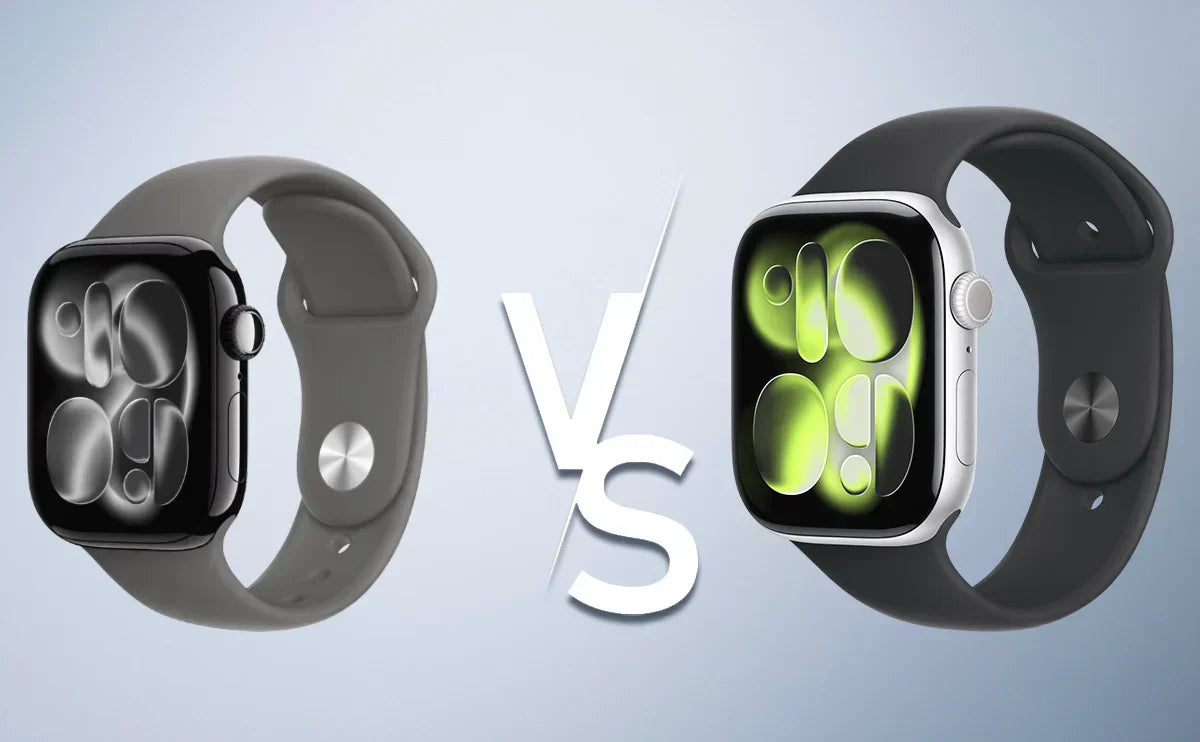
Choose the Apple Watch Series 11 42mm if you prefer a smaller case and less weight on your wrist. Choose the 46mm if extra screen space matters more to you. Neither is the right choice for everyone: wrist shape, your preferred band, and what you do on the watch all affect the decision.
This Apple Watch Series 11 42mm vs 46mm comparison covers the specifications, reading and input, everyday comfort, workouts, battery life, price considerations, and band sizing. The advice below combines published specifications with practical checks you can make yourself.
Also read the latest articles in our website below:
Garmin Venu X1 vs Apple Watch Series 11
Apple Watch Series 11 vs. Ultra 3 vs. SE 3
Size and specifications at a glance
The size label describes case height, not wrist circumference or screen diagonal. Compare the case width as well: a watch can fit within a strap's stated wrist range yet still feel too broad on the top of your wrist.
| Specification | Series 11 42mm | Series 11 46mm |
|---|---|---|
| Case height × width | 42 × 36mm | 46 × 39mm |
| Case depth | 9.7mm | 9.7mm |
| Display area | 970 sq mm | 1,196 sq mm |
| Display resolution | 374 × 446 | 416 × 496 |
| Aluminum GPS case weight, without band | 30.3g | 37.8g |
| Apple's listed wrist range | 130–200mm | 140–245mm |
Source: Apple's Series 11 technical specifications. Case weight changes with material and connectivity; the table compares the same aluminum GPS configuration. The wrist ranges do not mean that every included or replacement band fits that entire range.
The 46mm has approximately 23% more display area, calculated from Apple's figures. That does not establish 23% faster reading or a fixed number of extra lines in every app. Both sizes use the S10 chip, so buying the larger case does not mean buying a different processor.

Wrist fit, cuffs, and overnight comfort
Measure your wrist where you normally wear a watch, with the tape snug rather than pulled tight. Then consider the flat area across the top of your wrist. Two people with the same circumference can prefer different sizes because their wrist shapes differ.
The 42mm is a sensible starting point if you dislike a watch feeling prominent, wear fitted sleeves, or want a lighter case overnight. The 46mm can still suit a smaller wrist if its case sits comfortably and the band adjusts properly. A rigid rule such as “under 17cm must choose 42mm” overlooks those differences.
When trying them on, lower your arms, type at a desk, bend your wrist, and pull a usual shirt cuff over the watch. If the case pushes against your hand or catches repeatedly, that matters more than how it looks in a single photograph.
For sleep tracking, consider whether the watch presses against your wrist or bedding in your normal sleeping position. The smaller case may be your preference, but comfort cannot be guaranteed from dimensions alone. Include the band's buckle and material in the comparison.

Screen readability and message input
The 46mm gives you more space for notifications, workout information, and app controls. It is worth trying if you regularly read messages on the watch or find your current display crowded. The 42mm may be sufficient if most interactions are brief checks followed by using your phone.
Compare both watches with the same text size and the same notification. Read a longer message, scroll through it, and open the screen you use most often. Do not judge only from a watch face designed to look attractive in a store.
For replying, try your usual input method. A larger screen may feel easier to interact with, but it does not establish a measured reduction in typing errors. If you mostly use dictation or short preset replies, screen size may have less influence on your decision.
Apple lists text-size adjustments, Bold Text, Zoom, and VoiceOver among the Series 11 accessibility options. Test your preferred settings before deciding. A larger watch is an option for readability, rather than a guarantee of reduced eye strain or a substitute for checking what works for you.

Running, gym sessions, and everyday wear
For workouts, separate reading the display from keeping the watch comfortable. A runner who checks several data fields may prefer the 46mm screen. Someone who mainly reviews results afterward may place more value on the 42mm case size and weight.
Try a few arm movements and the wrist position you use while lifting or cycling. Check for movement of the case and interference with gloves or sleeves. If the watch slides around, review the band's adjustment before concluding that you need another case size.
Neither size should be labelled more accurate for GPS or heart-rate tracking solely because it is larger or lighter. A comparison of actual accuracy would need a suitable reference and repeatable testing. Shared hardware specifications do not mean that every reading in use will be identical.
For office or formal wear, check your usual cuff rather than assuming the 42mm will always slip underneath it. Both cases have the same listed depth; their different widths and the shape of the band still affect how the complete watch wears.

Battery life: does the 46mm last longer?
Apple gives Series 11 a headline rating of up to 24 hours of normal use and up to 38 hours in Low Power Mode. Its specifications do not provide a separate normal-use headline for the 42mm and 46mm. These ratings are conditional test results, not promised runtime for every routine. Apple specifications.
The shared rating does not prove that the two sizes last exactly the same time in a matched real-world test. It also does not support promising that the 46mm adds three or four hours, or a fixed amount of extra GPS time.
If battery life is your main concern, consider workout duration, cellular use, display settings, and when you can charge. For overnight tracking, a reliable charging opportunity may matter more than a presumed advantage from case size. When comparing battery reviews, look for the same settings, connectivity, battery condition, and activities on both watches.
Choose the 46mm for a screen you prefer; do not pay for it solely on the assumption that a guaranteed battery gain comes with the larger case.
Price, materials, and value
Compare current prices for the same case material, connectivity, and included band. A discounted 46mm aluminum GPS watch and a 42mm cellular configuration are not a clean comparison of the price difference caused by size.
The larger screen has value if you will use it regularly. If both sizes are easy to read and the 42mm feels better, paying more for screen area may bring little practical benefit. Add any replacement band or optional cellular service to your total cost rather than comparing the watch price alone.
Material is a separate decision. Apple's specifications distinguish Ion-X front glass on aluminum models from sapphire on titanium models. Neither case size alone determines that choice. For a fuller discussion, see our Series 11 titanium vs aluminum comparison.
Health features and software
Do not move up to the 46mm because you expect its case size to unlock a different set of Series 11 health features. Apple presents the lineup's sensor and software capabilities together. Availability of a particular feature can still depend on region, device configuration, software, and eligibility requirements.
For example, choosing the larger case is not a way to gain ECG or sleep-tracking capabilities that are absent from the smaller Series 11. Check the requirements of the feature itself, rather than treating case size as a health upgrade.
For a size decision, focus on whether you will wear the watch consistently and can use its controls comfortably. A case you remove overnight because it bothers you may be less useful for your routine than one you willingly keep on.
Avoid claims that the smaller case produces more accurate health results, or that shared sensors guarantee identical results. Those statements require evidence beyond the specification sheet. Check Apple's requirements for any specific health function you intend to use before purchasing.
Band compatibility and a simple buying checklist
Check connector compatibility and wrist fit separately. A band can attach to the correct watch but still be too short, too long, or uncomfortable for your preferred adjustment.
Take particular care with “42mm” listings. Older Apple Watch generations also used that size name, so the number alone is not sufficient proof of compatibility. Apple's current 42mm Sport Band listing includes 38mm, 40mm, and 41mm compatibility. For another band, verify that product's explicit model and size listing.
When browsing Bandletic Series 11 bands, confirm your watch generation and case size, then check the band's wrist range and fastening style.
Before ordering:
- Measure your wrist and check the actual band length.
- Try the case with your normal sleeves and wrist movements.
- Read a notification using your preferred text settings.
- Compare equivalent configurations at current prices.
- Choose the combination you expect to wear comfortably throughout your routine.
Frequently asked questions
1. Is the 46mm too big for a small wrist?
It can feel too broad, but wrist circumference alone cannot settle that question. Check case position, band adjustment, and comfort while moving. Start by trying the 42mm if you already dislike larger watches.
2. Is the 42mm suitable for men?
Yes. Gender does not determine case fit. A man who prefers a lighter, less prominent watch can choose the 42mm; the relevant checks are wrist fit, readable text, and band length.
3. Which is better for reading notifications?
Try the 46mm first if screen space is your priority. Compare the same message and text settings on both sizes before deciding whether the extra space is worth the larger case.
4. Does the 46mm guarantee better battery life?
No. Apple's lineup rating is not evidence of a guaranteed size-specific advantage. A useful comparison needs matched usage and settings.
5. Will a longer strap make the 42mm fit a larger wrist?
A correctly compatible longer band can solve a strap-length problem within its stated range. It does not increase screen size or change how the case sits on your wrist.
6. Which size is better for avoiding bumps or damage?
Check whether either watch catches during your own activities. Case material, glass, and how you wear it matter; a smaller case alone does not establish a lower damage rate.
If you have already chosen a size, our Series 11 titanium vs aluminum guide covers the next decision.
Share:
Apple Watch Series 11 vs Apple Watch Series 10 - The Truth About the Upgrade!
Google Pixel Watch 4 vs Pixel Watch 3 - Which Google Smartwatch Should You Buy in 2025?