

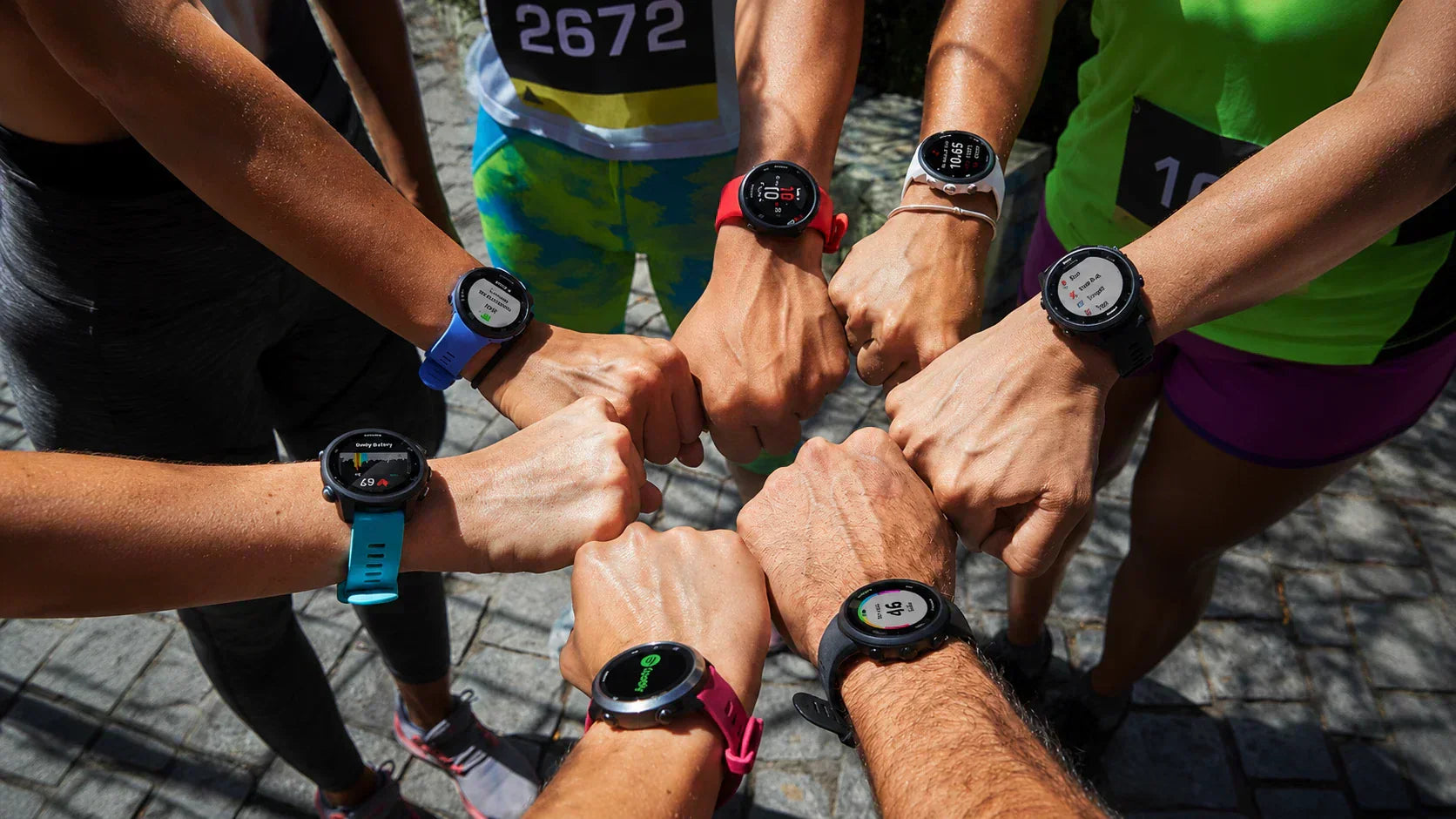
When Sabastian Sawe crossed the finish line at the 2026 London Marathon with a historic time of 1:59:30, or when Tigst Assefa shattered records at 2:15:41, tech analysts noticed something fascinating on their wrists. They weren't wearing $1,000 luxury flagships. They were wearing mid-range, performance-first tools—specifically, the Garmin Forerunner 255. In elite events like the London Marathon, every single gram of weight, every pulse of the optical heart rate sensor, and every ping of the GPS tracking matters. These athletes trust their watches blindly to deliver flawless athletic data.

But here is the catch that elite marathoners know, and average users ignore: your Garmin Forerunner watch is only as reliable as the Garmin Forerunner watch band holding it to your skin. If you are using one single factory Garmin watch band for your entire lifestyle, you are actively bottlenecking an elite piece of engineering. Whether you are running long distances, training at the gym, cycling through tough terrains, or swimming laps, a single material Garmin watch band cannot adapt to every environment. In this guide, we are diving deep into the real-world performance failures of different materials, exploring how aftermarket bands protect your device, and why rotating your Garmin watch band is the ultimate cheat code for data accuracy and skin health.
📊 THE QUICK VERDICT: MATCHING GEAR TO PERFORMANCE
-
Garmin Forerunner watch band For Running & Cycling: Prioritize ultra-lightweight, micro-adjustable woven nylon to lock the biometric sensors perfectly against your skin without wrist chafing.
-
Garmin Forerunner watch band For Swimming & Gym Workouts: Stick to high-grade, non-porous fluoroelastomer or certified silicone that won't absorb sweat, water, or bacteria.
-
The Golden Rule: Never use a single strap for everything. Separate your wet sports from your dry endurance sports to prolong the lifespan of your device and protect your skin.
1.Running and Cycling Hurdles—The Real Limit of a Single Garmin Forerunner Watch Band

When you are deep into a marathon block or pushing hard on a high-speed cycling route, consistency is everything. Garmin's official product design targets four core pillars: the gym, running, cycling, and swimming. Yet, users who stick to one standard Garmin watch strap for all four activities quickly hit a wall. For instance, athletes rocking a heavy training cycle on a garmin forerunner 245 watch band or the classic garmin forerunner 235 watch band frequently report severe wear and tear within just six months.
When pushing your limits on the pavement or the bike, the wrong Garmin watch strap material directly compromises your metrics:
-
The Silicone Garmin Watch Band Snap: Factory silicone is highly durable but relies on a thin silicone Garmin watch band keeper loop. Under the constant friction of high-cadence running or road vibration during cycling, these loops break constantly, leaving the tail of your Garmin watch strap flapping mid-workout.
-
The Elastic Garmin Watch Band Slip: Comfort-focused elastic Garmin watch bands feel great during casual wear. However, during intense running, the constant vertical oscillation of the watch body causes elastic to loosen rapidly. Readjusting your watch every five minutes kills your pacing focus.
-
Chafing and Shifting: A low-quality Garmin watch band will slip when soaked in sweat. This constant movement acts like sandpaper against your wrist, causing friction burns and open blisters during long-distance endurance sessions.
2.Swimming and Gym Disasters—Why Certain Garmin Forerunner Watch Bands Fail in the Water
Swimming and high-intensity gym training introduce elements that destroy standard fabrics: chlorine, salt water, organic body oils, and heavy impact. If you own a premium multisport triathlete setup like a garmin forerunner 965 watch band replacement or are trying to optimize your workout with garmin forerunner 165 watch bands options, material selection becomes a safety hazard for your device.

The environment of the pool or the weight room exposes two massive failure points:
-
The Fabric Rot: Woven nylon or canvas Garmin watch straps are phenomenal for dry running. But if you take them swimming or wear them during a heavy gym session, they act like a sponge for chlorinated water, sweat, and dead skin. If not washed instantly, they rot, trap foul odors, and breed bacterial colonies.
-
The Magnetic GPS Killer: Magnetic mesh Garmin watch band has become incredibly popular for quick adjustments. However, user telemetry data reveals a dark side: strong aftermarket magnets directly interfere with the Garmin internal digital compass and high-precision Multi-Band GPS tracking. Even worse, during explosive swimming strokes or heavy kettlebell cleans at the gym, the force of the water or movement easily snaps a magnetic clasp open, causing your expensive device to sink to the bottom of the pool or smash onto a concrete floor.
3.The Multi-Strap Strategy—Why You Must Rotate Your Garmin Forerunner Watch Band
No single material is flawless because no material can change its physical properties on command. A heavy-duty, waterproof Garmin watch band built to handle chemical pool water is naturally going to be less breathable during a blistering 10-mile mid-summer run. If you want to maximize the life of your device and maintain pristine skin health, establishing a strategic rotation matrix for your Garmin watch band's forerunner collection is non-negotiable.
|
Activity Type |
Optimal Strap Material |
Core Performance Benefit |
|
Running & Cycling |
Breathable Ultra-Light Nylon |
Zero sensor slip, prevents wrist chafing |
|
Swimming & Gym |
Fluoroelastomer / Pure Silicone |
100% waterproof, zero sweat odor absorption |
|
Daily & Recovery |
Soft Woven Textile / Canvas |
Maximum skin breathing, reduces rash risks |

Rotating your hardware solves three critical long-term issues:
-
Hardware Component Preservation: A proper Garmin forerunner 55 watch bands setup or an advanced Garmin forerunner 970 watch bands configuration relies on tiny, critical metal spring bars, lug pins, and buckle components. Constantly soaking the exact same metal bits in salt water and sweat accelerates oxidation and rust. Swapping bands allows components to dry completely.
-
Dermatological Recovery: Your skin needs to breathe. Trapping moisture beneath a non-porous Garmin watch band for 24 hours a day causes contact dermatitis and fungal rashes. Swapping to a clean, dry fabric band post-workout keeps your skin flawless.
-
The Hardware Focus: High-quality aftermarket brands have mastered the tiny structural connectors. When you purchase a premium alternative Garmin watch strap, you aren't just buying fabric or rubber—you are investing in precision-machined lugs that snap locked into the watch chassis, ensuring zero rattle during active sports.
Final Thoughts: Treat Your Garmin Forerunner Watch Strap Like Your Running Shoes
You wouldn't wear a pair of carbon-plated marathon racing shoes to lift heavy weights in the gym, and you shouldn't expect a single Garmin watch strap to survive swimming, running, and daily life without compromise. Garmin makes world-class tracking hardware, but optimizing it is up to you. By understanding the unique demands of your sport and treating your strap collection as a modular equipment kit, you protect your investment, save your skin, and ensure that your training metrics remain perfectly accurate every single step of the way.
FAQ
Q1: Can a magnetic replacement Garmin watch strap permanently damage my Garmin Forerunner's GPS accuracy?
A: It will not permanently break the hardware, but it will temporarily distort your tracking metrics while worn. Garmin watches rely heavily on internal tri-axial compasses and precise satellite signal positioning. Strong aftermarket magnets warp these magnetic fields, leading to erratic map routing, artificial pace drops, and inaccurate distance tracking during running or cycling. Stick to traditional pin-and-tuck or hook-and-loop fasteners for workouts.
Q2: How often should I wash my fabric nylon Garmin watch strap if I use it for daily running?
A: If you are running or training in the gym 3 to 4 times a week, you should wash your nylon Garmin watch strap at least once a week. Rinse it thoroughly under warm fresh water with a drop of mild, anti-bacterial soap to dissolve trapped sweat salts and skin lipids, then let it air dry completely before clipping it back onto your device.
Q3: Are aftermarket Garmin watch straps safe for heavy-impact sports like mountain biking or trail running?
A: Yes, but only if you avoid the bargain bin. When shopping for high-velocity sports, choose alternative brands that utilize reinforced stainless steel buckles or ultra-secure hook-and-loop fasteners. Avoid cheap, unbranded plastic clip mechanisms that can snap under heavy chassis vibration or impact.
Share:
Apple Bands vs. Replacement Bands for Apple Watch: Which Is Actually Worth Your Money?