


This review evaluates whether the Garmin Forerunner 255 remains worth buying in 2026 compared to the newer 265. It concludes that the 255 still offers strong GPS accuracy, training features, and battery life, with the main trade-off being its MIP display.
Main content:
- Is the Garmin Forerunner 255 Still Worth Buying in 2026?
- Garmin Forerunner 255 Display - Is the MIP Screen Good Enough for Serious Runners?
- Garmin Forerunner 255 GPS & Heart Rate Accuracy for Marathon Training
- Do You Need All the Training Features in Garmin Forerunner 255?
- Garmin Forerunner 255 as a Daily Wear: Comfortable and Practical for Active Lifestyles
- Garmin Forerunner 255 Long-Term Review - What Owners Love & What They Don’t
- Is Garmin Forerunner 255 Worth the Current Price in 2026?
- Who Should Buy the Garmin Forerunner 255? Best for Marathoners and Serious Runners
- Final Buying Advice - Should You Buy the Garmin Forerunner 255 Now or Wait?
- FAQs about Garmin Forerunner 255 Review
Garmin Forerunner 255 is still worth buying in 2026 — but mainly if you prioritize training performance and battery life over display quality.
Although the newer Forerunner 265 features a brighter AMOLED screen that looks more modern and vibrant, the 255 remains strong in the areas that matter most to serious runners: GPS accuracy, advanced training metrics, multisport support, and long battery life. If you're curious about how the newer model performs in real-world testing, you can read our detailed Garmin Forerunner 265 review for a full breakdown of its strengths and trade-offs. At its current price, the 255 can actually offer better value for money.
If you’re deciding between the two models and wondering whether the MIP display feels outdated — or trying to confirm which watch is better for marathon training — be sure to read our detailed Garmin Forerunner 265 vs Forerunner 255 comparison guide, where we break down the real differences in display quality, battery life, GPS performance, and training features. In this review, we’ll focus specifically on how the Forerunner 255 performs in real-world use so you can make a confident and informed decision.
Is the Garmin Forerunner 255 Still Worth Buying in 2026?
Yes - the Garmin Forerunner 255 is still worth buying in 2026, but only if you care more about performance, battery life, and training data than having the newest AMOLED screen.
If your priority is accurate GPS, reliable heart rate tracking, advanced training metrics (VO2 max, HRV status, training load), and long battery life in a lightweight running watch, the Forerunner 255 remains one of the best value options in its price range. It is not outdated in terms of performance. It is simply less flashy than the Forerunner 265.
However, if you want a brighter AMOLED display, smoother animations, and a more modern smartwatch look — or you know you’ll regret not owning the latest model — then the 265 may be the better choice for you.
The Bottom Line
- Buy the Garmin Forerunner 255 if you want a serious running watch with strong GPS accuracy and long battery life at a better price.
- Skip it if display quality and “newest model” status matter more to you than training performance.
- Will you regret not getting the 265? Only if screen quality is important to you. In terms of core running features, you are not missing anything critical.
For most runners focused on half marathon or marathon training, the Garmin Forerunner 255 is still a smart, rational purchase in 2026 — not a compromised one.

Garmin Forerunner 255 Display - Is the MIP Screen Good Enough for Serious Runners?
The Garmin Forerunner 255 uses a 1.3-inch 260×260 color MIP display, while the newer Forerunner 265 features an AMOLED screen.
The clear answer: the MIP display is not outdated — it is optimized for visibility and battery efficiency rather than visual vibrancy.
Compared to AMOLED watches like the Forerunner 265 or newer models such as the Apple Watch Series 11 and Apple Watch Ultra 3, the 255’s screen looks less bright and saturated. If you're considering Apple’s latest smartwatches for running or everyday wear, our in-depth Apple Watch Series 11 review and detailed Apple Watch Ultra 3 review break down how they compare in display quality, battery life, and outdoor visibility. The Forerunner 255, by contrast, prioritizes clarity and efficiency over visual vibrancy. Whether that trade-off matters ultimately depends on your expectations.
Is It Too Dim Indoors?
Indoors, the MIP display looks less vibrant than AMOLED, especially under artificial lighting. However, the adjustable backlight keeps text and metrics clear and readable. It does not “pop,” but it remains fully usable.
If you prioritize contrast and brightness indoors, AMOLED wins. If readability is your priority, the 255 performs well.
MIP vs AMOLED – What’s the Real Difference?
Outdoors is where the Garmin Forerunner 255 display stands out. Because it is transflective and always-on, it becomes clearer in direct sunlight without glare or brightness adjustment. This also helps preserve battery life.
AMOLED offers:
- Brighter colors
- Deeper contrast
- A more modern appearance
MIP offers:
- Superior outdoor readability
- Always-on clarity
- Significantly longer battery life
The MIP screen helps the Forerunner 255 reach up to 14 days in smartwatch mode, far exceeding most AMOLED alternatives.
In short, the display is only a drawback if you expect a smartwatch aesthetic. For performance-focused training, it remains practical and efficient.

Garmin Forerunner 255 GPS & Heart Rate Accuracy for Marathon Training
Yes — the Garmin Forerunner 255 provides GPS accuracy and heart rate tracking that are reliable enough for marathon and structured training.
For most runners, the data is precise enough to guide pacing, heart rate zones, and long-term progress.
Multi-Band GPS – Does It Make a Difference?
The Forerunner 255 supports dual-frequency (L1 + L5) multi-band GNSS, along with GPS, GLONASS, Galileo, BeiDou, and QZSS.
In real-world use, this improves tracking in:
- Dense urban areas
- Tree-covered routes
- Courses with sharp turns
Route maps align closely with actual roads, pace readings remain stable, and track sessions show minimal drift.
If you run mostly in open areas, standard GPS is already strong. Multi-band mode mainly improves reliability in more complex environments, though it uses more battery.
Importantly, the margin of error is small enough that it will not distort pacing strategy or weekly mileage totals.
Heart Rate Accuracy – Can You Trust It?
Using Garmin’s Elevate V4 optical sensor, heart rate readings during steady runs align closely with chest strap data. It is reliable for base runs, tempo efforts, and marathon training.
Like all wrist-based sensors, it may lag slightly during short sprints or high-intensity intervals. If interval precision is critical, pairing a chest strap resolves this.
For marathon preparation, stable pacing, consistent distance tracking, and reliable heart rate zones matter most — and the Forerunner 255 performs well in all three areas.
For the vast majority of runners, it is accurate enough to support serious training without concern.

Do You Need All the Training Features in Garmin Forerunner 255?
The Garmin Forerunner 255 training features are not overkill for most runners — they are flexible tools that scale with your goals.
The watch includes advanced metrics such as VO2 Max estimation, training load and status, HRV tracking, daily suggested workouts, race prediction, and native running power. For a mid-range running watch, that may sound complex at first.
But you don’t have to use everything.
The Garmin Forerunner 255 works perfectly well as a simple running watch. You can track pace, distance, and heart rate without diving into deeper analytics. The advanced metrics are optional layers designed to support structured training, not complicate everyday use.
For runners with performance goals, features like VO2 Max and training status help track long-term trends. They answer practical questions: Are you improving? Are you overtraining? Is your recovery adequate? These aren’t lab-grade measurements, but they are consistent enough to guide progression over time.
HRV status and daily suggested workouts further reduce guesswork. By analyzing overnight recovery and recent load, the watch suggests whether to push harder or ease off. You’re not required to follow these suggestions, but they provide structure — especially useful for runners without a coach.
The race predictor works in a similar way. It won’t guarantee a finish time, but it reflects fitness trends. If predicted times improve over weeks, your training is likely progressing.
In short, the Garmin Forerunner 255 is not overly complex — it is scalable. If you train seriously, its advanced training features are genuinely useful. If you prefer casual runs, you can ignore the deeper analytics without losing usability.
You are not paying for unnecessary complexity. You are paying for capability that becomes valuable as your training goals grow.

Garmin Forerunner 255 as a Daily Wear: Comfortable and Practical for Active Lifestyles
Yes — the Garmin Forerunner 255 works well as a daily watch, as long as you accept that it is designed as a performance-first device rather than a fashion smartwatch.
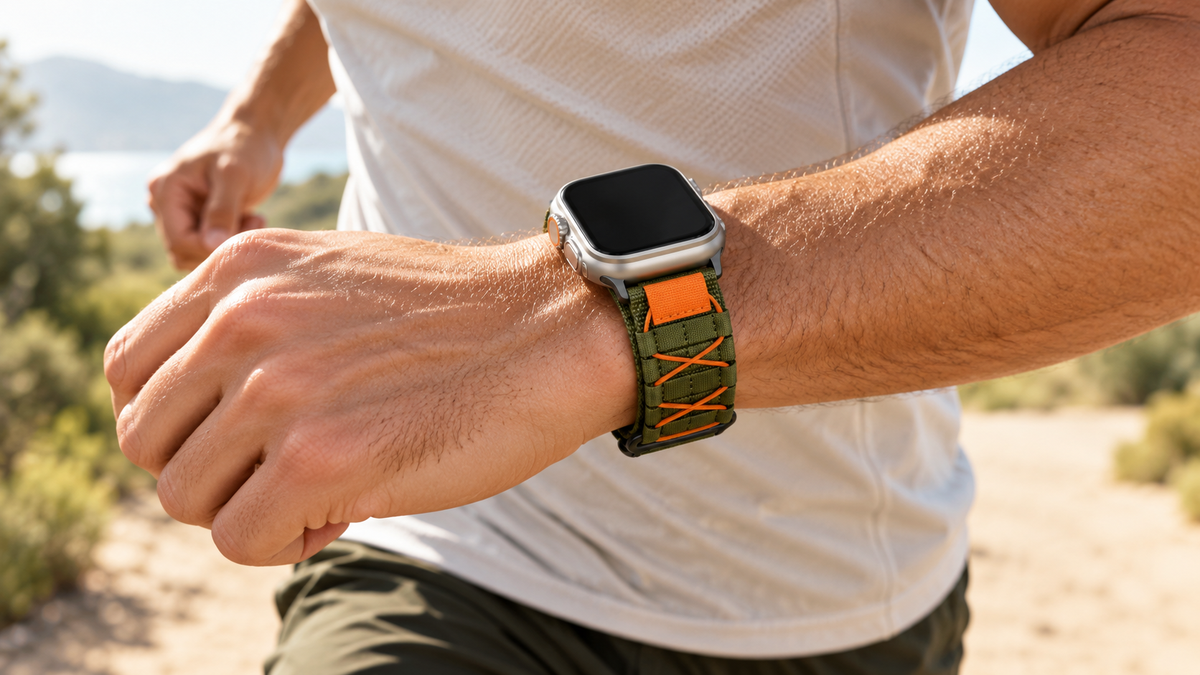
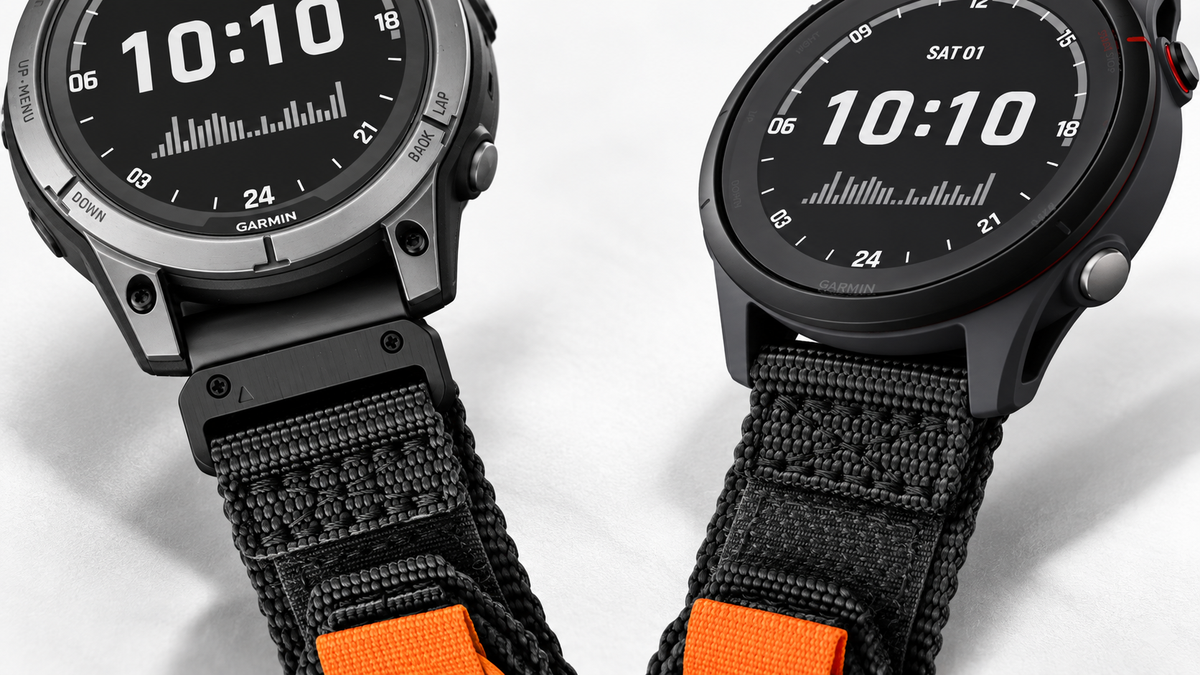
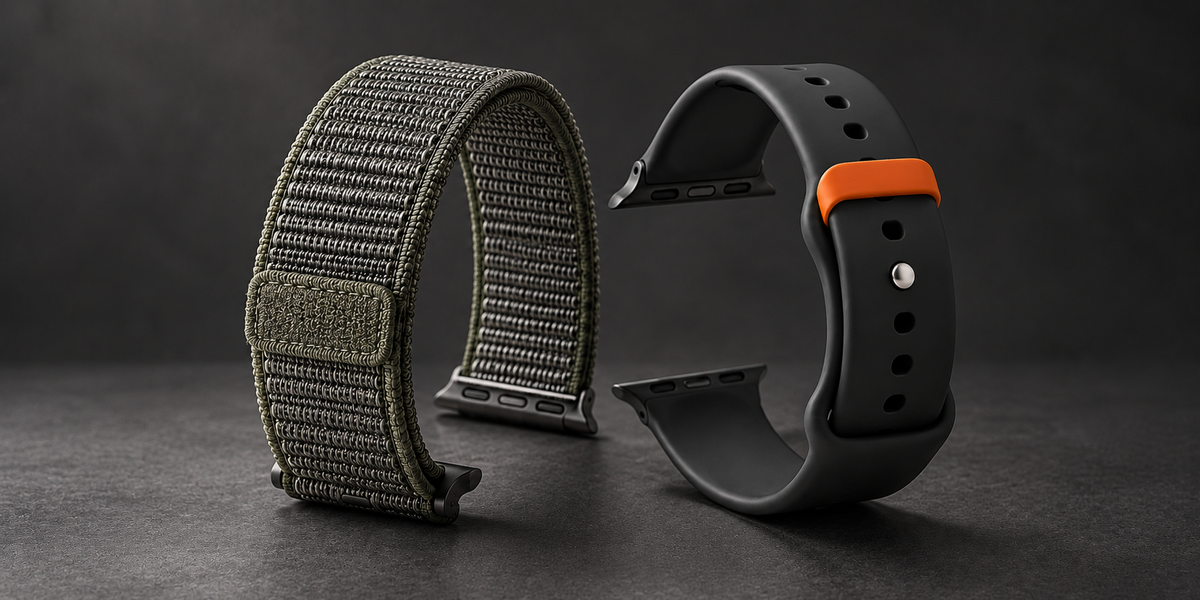
It is lightweight and comfortable for all-day wear, including sleep. The fiber-reinforced polymer case and silicone strap feel practical and durable. If you want to personalize the look, explore our collection of Bandletic Garmin Forerunner 255 watch bands for sport, casual, and marathon-ready styles.
Visually, it looks like a running watch. It blends well with casual clothing but feels less refined than an Apple Watch in formal settings.
Smart notifications work reliably for calls, texts, and apps, though interaction is limited compared to full smartwatch ecosystems. It works best as a training watch with notification support, not as an app-heavy smartwatch replacement.
The Music version allows phone-free runs with onboard storage and Bluetooth headphone pairing. It is worth considering only if you regularly run without your phone.
Battery Life in Daily Use
Battery life remains one of the strongest advantages of the Garmin Forerunner 255. While rated for up to 14 days, real-world usage typically delivers 10–14 days with notifications and several GPS workouts per week.
That means no daily charging and significantly less battery anxiety than AMOLED-based smartwatches.
For active users who value endurance and reliability, it performs very well as an everyday wearable.

Garmin Forerunner 255 Long-Term Review - What Owners Love & What They Don’t
After long-term use, the Garmin Forerunner 255 leaves a clear impression: most owners are satisfied with its performance, but expectations around display and smartwatch features vary.
What Owners Love
Users consistently highlight:
- Accurate GPS and reliable heart rate tracking
- Long battery life with minimal charging
- Advanced training features that support structured progress
The watch feels stable and predictable. It focuses on performance rather than flashy visuals, which many serious runners prefer.
Battery life is often the biggest advantage, especially compared to AMOLED-based alternatives.
Common Complaints
The main criticism is the MIP display. Some users feel it looks less modern than the Forerunner 265 or Apple Watch.
Others note the button-based interface and limited smartwatch features. If someone expects a full smartwatch experience, the 255 may feel basic.
Importantly, these complaints rarely involve training accuracy.
Do People Regret Buying It?
Regret usually happens for one reason: wishing they had chosen an AMOLED model instead.
In terms of GPS accuracy, heart rate reliability, and training tools, most users do not feel they are missing essential features.
Performance regret is rare. Display regret is occasional.
If screen quality matters most to you, consider the 265. If training performance and battery life are your priorities, long-term satisfaction with the Garmin Forerunner 255 is generally high.
Is Garmin Forerunner 255 Worth the Current Price in 2026?
Yes — the Garmin Forerunner 255 is worth the current price in 2026 if you prioritize training performance and battery life over display aesthetics.
At its reduced price point compared to newer models like the Forerunner 265, the 255 delivers nearly the same core training capabilities: multi-band GPS, reliable heart rate tracking, advanced training metrics, and long battery life. In terms of performance per dollar, it remains one of the strongest value options in Garmin’s running lineup.
You are not paying for outdated hardware. You are paying for proven functionality. The only meaningful compromise is the MIP display instead of AMOLED.
If your goal is structured training, race preparation, and consistent progress, the Garmin Forerunner 255 offers strong value in 2026. If you are paying primarily for screen quality or modern visuals, the 265 may justify the higher cost.
For performance-focused runners, the 255 still makes financial sense.

Who Should Buy the Garmin Forerunner 255? Best for Marathoners and Serious Runners
The Garmin Forerunner 255 is not designed for everyone — and that’s exactly why it remains worth buying in 2026.
It is best suited for runners who:
- Train consistently for 5K, 10K, half marathon, or marathon
- Care about GPS accuracy and reliable heart rate tracking
- Want advanced training metrics without paying flagship prices
- Value long battery life over a brighter AMOLED display
- Prioritize performance and data over style
If your goal is to improve race performance, follow structured training plans, and build long-term consistency, the Forerunner 255 delivers everything you need. Its multi-band GPS, HRV status tracking, training load analysis, and race prediction tools are fully capable of supporting serious progress.
It is also a strong choice for triathletes and multisport athletes who want reliable performance tracking without stepping into premium-tier pricing.
However, the Garmin Forerunner 255 is not ideal for:
- Users who prioritize display brightness and visual aesthetics
- Buyers who want a smartwatch-first experience
- People who simply want the newest model available
This is a performance-first running watch built for athletes who care about results, not status.
Final Buying Advice - Should You Buy the Garmin Forerunner 255 Now or Wait?
Here is the clear answer:
Yes, you should buy the Garmin Forerunner 255 now if you want a high-performance running watch with excellent value in 2026.
It is not outdated in GPS accuracy, heart rate monitoring, training features, or battery life. In core performance metrics, it remains highly competitive. The only area where it feels older is the MIP display — and that is a deliberate trade-off for longer battery life.
Waiting for a replacement model will not meaningfully improve your training. The Forerunner 255 already includes:
- Multi-band GNSS support
- HRV-based recovery insights
- Training load and status tracking
- Race tools and structured workouts
- Long-lasting battery performance
These are the features that directly impact results.
If you are hesitating because of the Forerunner 265:
- The 265 offers a brighter AMOLED display.
- It does not dramatically improve core training capability.
If you are hesitating because you think the 255 might become obsolete soon:
- Its hardware and software are already mature.
- It remains fully supported within Garmin’s ecosystem.
The decision is straightforward:
- Want a modern AMOLED display? Choose the 265.
- Want the best balance of performance and price? Buy the 255 now.
There is no strong reason to wait unless display quality is your top priority.
For runners focused on performance, consistency, and value, the Garmin Forerunner 255 is still a smart and confident purchase in 2026.
FAQs about Garmin Forerunner 255 Review
Is the Garmin Forerunner 255 still worth buying in 2026?
Yes. In this Garmin Forerunner 255 review, the watch remains worth buying in 2026 for runners who prioritize GPS accuracy, advanced training features, and long battery life over a brighter AMOLED display.
What is the main difference between the Garmin Forerunner 255 and 265?
The biggest difference is the display technology. The Garmin Forerunner 255 uses a MIP screen, while the Forerunner 265 features a brighter AMOLED display. Core training features, GPS performance, and health tracking capabilities are largely similar.
How accurate is the Garmin Forerunner 255 GPS?
The Garmin Forerunner 255 supports multi-band GNSS, delivering reliable and stable tracking for road running, urban routes, and marathon training. In most real-world scenarios, GPS accuracy is consistent and dependable.
Is the heart rate monitoring on the Garmin Forerunner 255 reliable?
Yes. The Garmin Forerunner 255 provides accurate heart rate data during steady runs and long-distance training. Minor lag may occur during high-intensity intervals, as with most wrist-based optical sensors.
Is the MIP display on the Garmin Forerunner 255 too dim?
Indoors, the MIP display appears less vibrant compared to AMOLED screens. However, outdoors it performs extremely well and remains clear and highly readable even in direct sunlight.
What is the real battery life of the Garmin Forerunner 255?
In real-world usage, the Garmin Forerunner 255 typically lasts between 10 and 14 days in smartwatch mode, depending on GPS activity, notification usage, and multi-band settings.
Is the Garmin Forerunner 255 good for beginners?
Yes. The Garmin Forerunner 255 works well as a simple running watch for beginners, offering pace, distance, and heart rate tracking, while advanced training metrics remain optional as your experience grows.
Do people regret buying the Garmin Forerunner 255?
Most owners do not regret buying the Garmin Forerunner 255 for performance reasons. Regret typically relates to preferring an AMOLED display rather than dissatisfaction with GPS accuracy or training features.
Share:
Garmin Quatix 8 Pro vs Garmin Quatix 7 Pro - Is the Upgrade Worth It for Offshore Boaters?
10 Best Garmin Watches for Running in 2026 Ranked by Runner Type